

News
Modern infrastructure is powered by advanced electronics. Vehicles, factories, medical devices, and communication networks all rely on transferring massive amounts of data between systems at extremely high speeds and voltages. But performance comes with a side effect; Electromagnetic Interference (EMI). And when interference wins, sensors fail, connections falter, and critical safety systems are put at risk.
Cables are no longer “just wires,” but an integral part of the reliability and effectiveness of the overall system. So, how to shield them effectively from damaging interference? Two companies, ACOME and Skultuna Induflex, have partnered in finding solutions to address the challenge. Skultuna Induflex brings a wealth of materials knowledge and an ability to combine metals, polymers, and functional layers into engineered laminates – to create effective shields. ACOME plays a vital role in designing the modern data transmission architecture that keeps communication networks operational.
Jerome Joncquel, System Engineering Leader at ACOME, explains the challenge of cable shielding. “Tomorrow’s vehicle architecture will require an interference-free network which coexists with the high currents and frequencies of high-voltage systems, including batteries, drivetrains, air-conditioning, and steering wheel. All these systems create interference fields which can impact data communication and signal transfer.”
“In older systems, the signals were slower and less sensitive. But today’s vehicles are basically computers on wheels. At high speeds, especially above 10 MHz, signals become highly sensitive. The slightest interference can affect multiple systems at once,” Mr. Joncquel explains.
Mohsin Saleemi, head of R&D at Skultuna Induflex, agrees. “Future automotive systems demand unique material properties and high-end performance. Selecting appropriate metal foils and film compositions can play an important role in cable design,” says Mr. Saleemi.
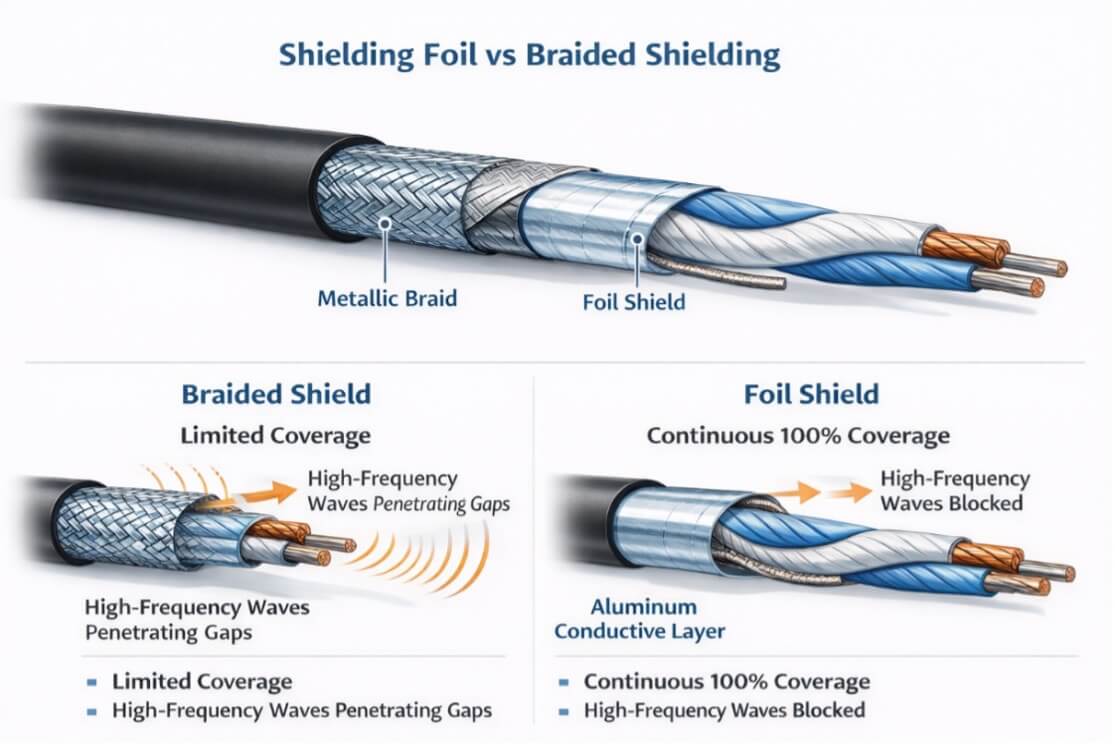
Mohsin Saleemi explains why using braids only for cable shielding is not the ideal option in high-frequency data cable designs. “A combination of foils and engineered laminate will always provide better protection against interference. But there’s more to it than the material,” Mohsin continues. “Foils have to be applied consistently, grounded properly and connected correctly. And finally, it must be manufactured reliably on a scale. It’s no good passing a lab test only to fail in real-world production. At Skultuna Induflex we’re blessed to have both a well-equipped laboratory and world-class production.”
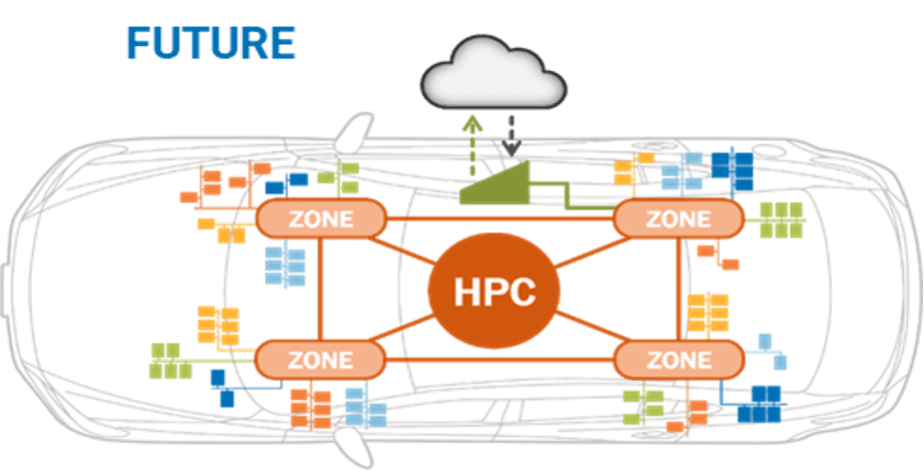
For Jerome Joncquel, the direction is clear. “As vehicles move to Multi-Gigabit Ethernet, embedded network components will need to support higher data speeds, greater bandwidth, and better scalability. Autonomous driving cars are a typical example of a complex communication system where zonal architecture, Radars, LIDARs and high-definition cameras (4K/8K) interact with each other to detect the environment. For outside links to the car, wireless and cellular technologies (4G/5G) will serve Internet-based services, over-the-air (OTA) software updates, eCall location services, Cloud access and V2X. All these systems require effective shielding so that each signal can be transferred and translated without interference.
Mr. Joncquel describes some of the products such as Ethernet generation, with transmission speeds of up to 10 Gbps, is ready for introduction into series projects. Skultuna Induflex has brought R&D technical support to ACOME, and an engineered tool kit of shielding cable tapes. These products have improved across Insertion Loss, Coupling and Screening Attenuation, which are key indicators of shielding performance.”
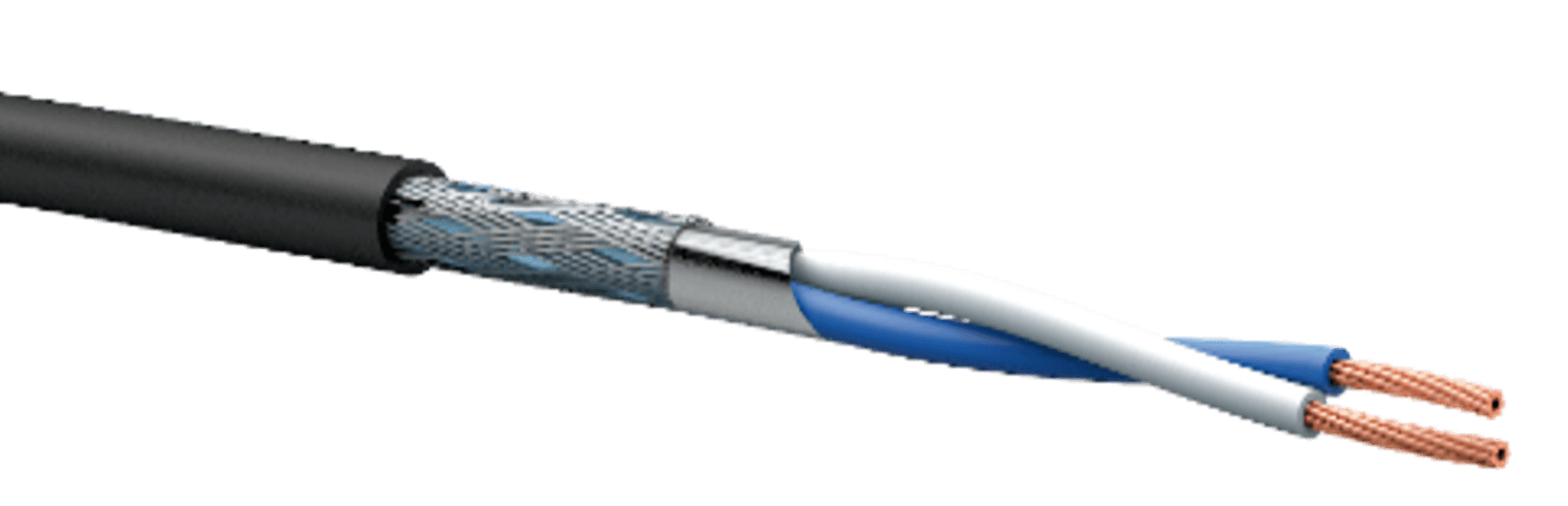
Figure: Skultuna shielding foils used under the braiding for the high frequencies performance in a Ethernet shielded cable with 2×0,14mm² STP 1Gbps


Introducing Skultuna PickWise, the world’s first cable tape solution finder. Regardless of application, you will find either the right cable tape to match your specifications. Or the right expert to discuss a customised solution with.
The answer is copper-copolymer laminates, which are redefining water barriers. They are ideal for reducing cable diameter and saving weight by combining multiple functions into a single metal screen layer. This allows the cable manufacturer to make longer cable sections without connectors.
Meet Mohsin, Koen, and Isa — the minds behind our cable tape innovations. They design solutions that handle tough demands:
• Heat resistance
• Moisture and water barriers
• EMI shielding
• Mechanical strength
• Processability in production